About
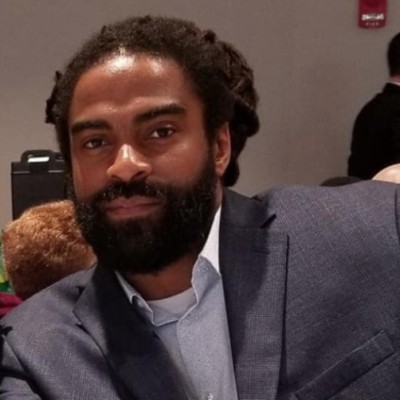
👋 I’m Fari Lindo — founder and creator of Data Inside Data™, a systems-focused builder space for technology learning, project documentation, analytics, and community-centered technical growth.
Data Inside Data™ supports the full lifecycle of building — from learning core concepts and troubleshooting real problems, to documenting workflows, sharing how-tos and fixes, presenting demos, joining technical discussions, and showcasing completed projects. It is a space for emerging and experienced technologists to learn, build, explain, reflect, and grow through real technical work.
I’m a systems-focused technologist working across IT infrastructure, cybersecurity, cloud engineering, data science and engineering, analytics, automation, and applied AI. My path has been shaped by hands-on learning, formal training, real troubleshooting, and the belief that technology becomes more meaningful when it is connected to people, purpose, and practical problem solving.
Data Inside Data™ grew from that lived experience. It is my way of turning learning, experimentation, project work, and documentation into something useful for others — especially builders who are curious about the future, serious about growth, and interested in solving real problems with care and intention.
At its core, this platform is about helping people become stronger builders: not only by learning tools, but by understanding systems, asking better questions, documenting the process, and sharing what they discover along the way.
My work centers on one core principle:
Build real systems. Document the thinking. Share the process.
Data Inside Data™ is where I design, build, and document technical systems — from early experiments to production-ready workflows. It is a living builder workspace where ideas move from concept to execution, where technical lessons are captured as they happen, and where complex topics are broken down into practical, repeatable steps.
Whether you are just starting out, returning to technology, changing careers, deepening your technical foundation, or already building across the stack, my goal is simple:
make systems thinking, technical learning, and real-world problem solving more understandable, usable, and shareable.
What I Share Here
- Real projects that reflect my experience, learning path, and ongoing technical pursuits
- Practical how-tos and fixes based on real development work
- Beginner-friendly explanations for those entering or returning to technology
- Deeper technical breakdowns for experienced builders and systems thinkers
- Project documentation, diagrams, workflows, and demos that reflect real-world engineering practice
- Builder-focused resources for learning, explaining, presenting, and improving technical work
- Future discussion spaces for technical questions, project conversations, and community-centered learning
This site serves as both a teaching space and a living archive — documenting what I build, what I learn, how systems evolve, and how practical knowledge can be shared with others.
This site is intentionally hands-on, architecture-aware, and grounded in real-world problem solving, not theory alone.
My Work Operates at the Intersection of
- Data systems — data science, analytics engineering, databases, dashboards, and insight workflows
- Application and systems development — web, tooling, automation, and project-based software workflows
- Cloud, DevOps, and DevSecOps practices — deployment, infrastructure awareness, security, and operational thinking
- IT and infrastructure — hardware, operating systems, networking, troubleshooting, and reliability
- Documentation-driven engineering — making technical work easier to understand, reproduce, and improve
- AI-assisted learning and building — using AI responsibly as a support layer for analysis, documentation, and technical growth
- Impact-oriented systems — education, community, accessibility, workforce readiness, and practical problem solving
It highlights the environments, training, and projects that shaped my approach to building, analyzing, and documenting technical systems.
%%{init: {
  "theme": "base",
  "themeVariables": {
    "background": "#ffffff",
    "lineColor": "#2563eb",
    "fontSize": "16px",
    "fontFamily": "Arial",
    "textColor": "#111827"
  }
}}%%
flowchart TB

classDef default fill:#f9fafb,stroke:#2563eb,stroke-width:2px,color:#111827,rx:6,ry:6;

%% ------------------------------------
%% Track 1 — Infrastructure Foundations
%% ------------------------------------
subgraph T1["Infrastructure Foundations"]
  A["2020<br/>Windows Server<br/>2012 R2"]
  B["2023<br/>BMCC A+<br/>Training"]
  P["2024<br/>AWS CCP<br/>Training<br/>—Cert"]
  C["2025<br/>Per Scholas<br/>CompTIA A+"]

  A --> B --> P --> C
end

%% ---------------------------------------
%% Track 2 — Application Dev Layer
%% ---------------------------------------
subgraph T2["Application Dev Layer"]
  D["2024<br/>Revature<br/>Java + SQL"]
  D2["2024<br/>Udacity<br/>AI w/ Python"]
  D --> D2
end

%% ---------------------------------
%% Track 3 — AI & Data Systems Layer
%% ---------------------------------
subgraph T3["AI & Data Systems Layer"]
  X["2023<br/>Fullstack Academy<br/>Data Analytics"]
  E["2024<br/>Udacity<br/>AI/ML Nanodegree"]
  F["2024<br/>AWS Racing League"]
  G["2025<br/>The Knowledge House<br/>Data Science Fellowship"]
  X --> E --> F --> G
end

%% ------------------------------
%% Track 4 — Platform Integration
%% ------------------------------
subgraph T4["DataInsideData™ Platform"]
  I["2026<br/>Platform Launch"]
end

%% -------------------------
%% Cross-track progression
%% -------------------------
C --> D
D2 --> X
G --> I
📌 This diagram represents a systems view of my technical development — not a linear timeline, but a layered progression of capabilities that inform the Data Inside Data™ builder space: learning, troubleshooting, documenting, analyzing, discussing, and showcasing real technical work.
🏅 Certifications & Credentials
These credentials reflect both formal training and hands-on application across data, cloud, and infrastructure systems.
☁️ AWS Certified Cloud Practitioner
Issued: March 2025
- Core AWS services
- Cloud security & shared responsibility
- Cost-aware infrastructure design
🛠 CompTIA A+ Certification
Issued: March 2025
- Hardware & operating systems
- Networking fundamentals
- Troubleshooting & system reliability
🎓 The Knowledge House Fellowship — Data Science Track
| New York City | 2025 Cohort |
An intensive fellowship focused on:
- Applied Python & SQL
- Machine learning foundations to expert
- Real client-facing analytics projects
- Communicating insights to non-technical stakeholders
📊 Udacity — AI Programming with Python Nanodegree
A structured program focused on building practical AI and machine learning capabilities using Python, with an emphasis on real-world application.
Focus Areas:
- Python for data and AI workflows
- NumPy and Pandas for structured data processing
- Matplotlib for visualization and analysis
- Classification and machine learning fundamentals
- Computer vision concepts
- LLMs and generative AI
- GPU acceleration with CUDA
- Applying models to real-world, business-driven problems
🧭 How to explore this site
- Start Here → Guided entry points based on your goals
- Projects → Architecture, systems, project builds, and case studies
- Posts → Tutorials, reflections, breakdowns, and lessons learned
- How Tos → Practical step-by-step walkthroughs
- Fixes → Concise troubleshooting notes based on real development
🤝 Let’s connect
If you are building, learning, documenting, troubleshooting, teaching, researching, or simply trying to understand where technology is headed, you are welcome here.
For collaboration, consulting, project conversations, or general questions:
📩 visit the Contact page.
Data Inside Data™ is not just a blog — it is a builder workspace for learning, documenting, discussing, analyzing, and showcasing real technical work.
Thanks for being here.
Data Inside Data™
Tech Hands, a Science Mind, and a Heart for Community™